AI Video Ads for Food & Beverage Brands
One product photo in. A ready-to-run food & beverage video ad out, with script, AI presenter, voiceover and captions included.
Make my food & beverage ad free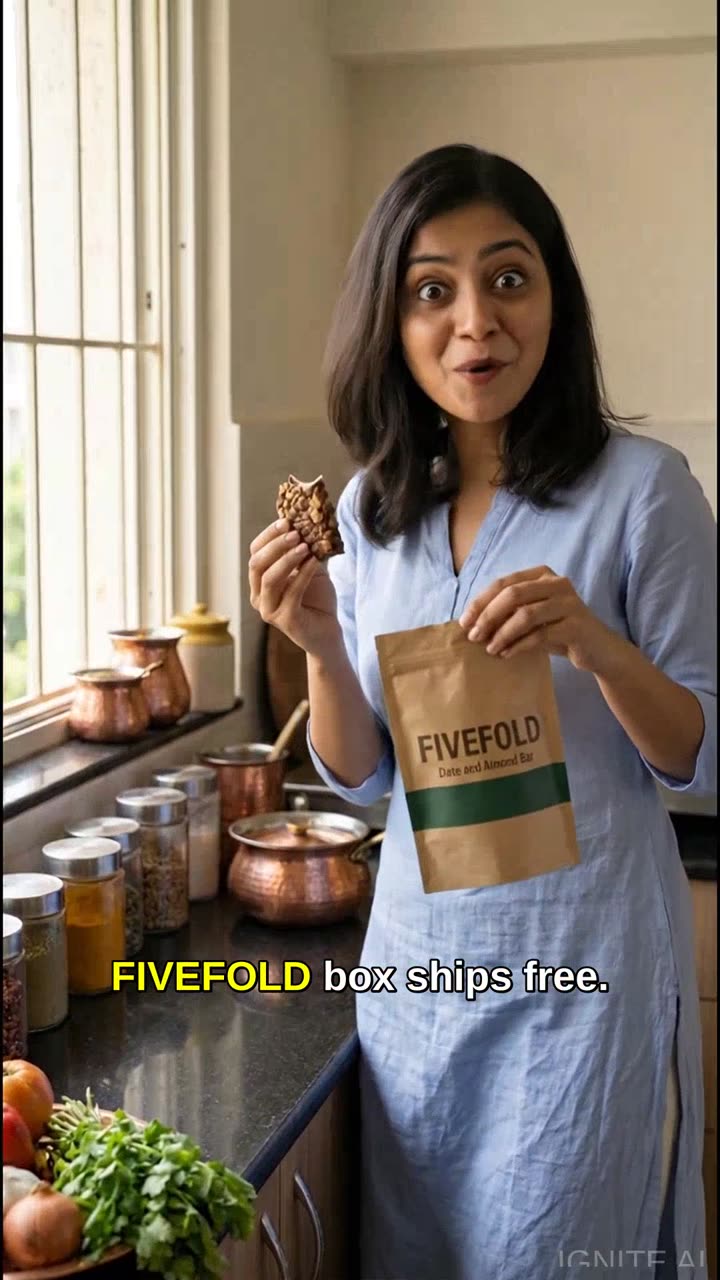
Food advertising has one job static images do at half power: appetite. The pour, the steam, the first bite reaction: the cues that trigger "I want that now" are motion cues. That's why F&B brands historically outspend everyone on production, and why smaller D2C food brands get priced out of their own category's winning format.
IgniteAI generates the first-taste moment from your packshot: a presenter tasting, reacting honestly and telling the ritual story, the 4pm chai pairing, the guilt-free midnight snack, the office drawer stash, with your packaging grounded in every scene.
5 hooks that work for food & beverage ads
"The 4pm slump has a fix, and it isn't a third coffee."
"It's not 'guilt-free.' It's just actually made of five things."
"I read the label of my 'healthy' snack once. Once."
"5 ingredients. 90 grams of intention. Zero palm oil."
"Your protein bar is a candy bar with a gym membership."
Not sure yours measures up? Score it free with the Ad Hook Analyzer.
What a 15-second food & beverage ad looks like
Hook · 0–4s
Presenter in a real moment (desk at 4pm, kitchen at midnight) naming the craving occasion, package visible and unopened to set up the reveal.
Feature · 4–11s
The open-and-taste beat: texture shown, honest first reaction, one ingredient-integrity line ("five ingredients, you can pronounce all of them").
CTA · 11–15s
Occasion-anchored close ("stock the office drawer, first box ships free") with the pack label-forward and brand name spoken.
Why UGC-style AI video fits food & beverage
Appetite is a motion trigger
Taste cues live in movement and reaction. Video ads consistently outconvert statics in F&B by wider margins than any other D2C category.
Label honesty is the 2026 claim
Short-ingredient-list positioning beats health-halo claims that invite scrutiny. One integrity line, spoken to camera, carries the whole trust argument.
Occasions are your ad calendar
The same snack sells as office fuel, gym recovery and festival gifting. Occasion variations are regenerations, not reshoots, which is the entire cost model flipped.
Upload one product photo and get a food & beverage video ad back in minutes. Free credits on signup, no card required.
Make my food & beverage ad →Frequently asked questions
Can AI video really make food look appetizing?+
The presenter-and-package format is reliably strong: reaction, ritual and packaging are what the engine grounds well. Extreme macro "cheese-pull" fabrication is where AI food content can look off, so the scripts steer to the moments that read authentic, because an unappetizing frame is worse than no ad. If your product's appeal is entirely visual-texture (melted cheese, syrup pours), pair the generated presenter ad with one real close-up clip shot on a phone. The hybrid consistently beats either alone.
How do FSSAI/labeling rules affect the ad script?+
The script keeps claims to what your label states: you provide the claims, and the engine will not invent nutrition or health promises. Occasion and taste storytelling do the selling, which is also the pattern that avoids regulatory review problems.
What's the best first campaign for a new F&B brand?+
One hero SKU, three occasion variations (morning, 4pm, late-night), identical offer. The occasion that wins tells you your real audience, usually within a week and well under a typical shoot's cost in ad spend. Keep the losing occasions in the account paused, not deleted: they become instant seasonal campaigns later (the gym-recovery angle that lost in July often wins in January).